
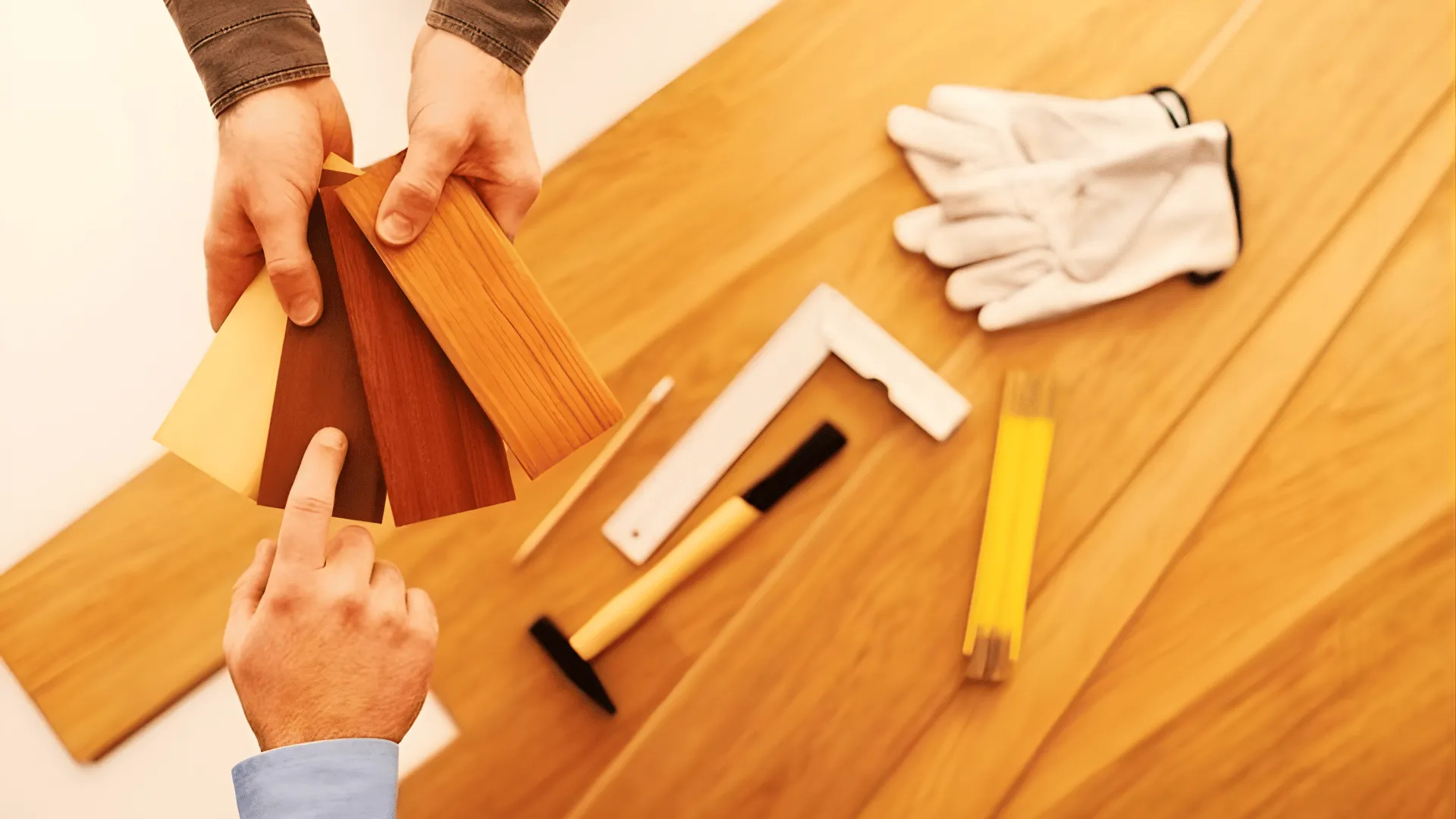
The Benefits of Woodgrain Finishes on Aluminium

Real timber is one of the most beautiful façade materials in architecture.
It’s also one of the most demanding.
Outdoor timber moves with humidity. It greys under UV. It needs sealing, recoating, and active maintenance for the life of the building. On a coastal façade or a tall commercial elevation, those constraints stop being theoretical and turn into a maintenance schedule someone has to deliver against, every year, for decades.
Woodgrain finish on aluminium is a different proposition.
It’s not pretending to be timber. It’s an engineered finish that carries timber’s visual character without timber’s physical demands. The underlying material is aluminium. That brings dimensional stability, resistance to rot and movement, and effectively no upkeep across the building’s life. The surface treatment is a sublimation process. A wood pattern is transferred into the powder coat at high temperature, fusing the design into the coating itself.
The result is a finish that reads as warm and natural at distance, holds detail close up, and performs the way aluminium performs.
Twenty years on, it looks the way it did when it was installed. The owner hasn’t sealed it, sanded it back, or replaced any of it.
Coastal façades are an obvious case for woodgrain. Real timber doesn’t last long against salt and UV, and a maintenance schedule that fails in year three becomes a problem nobody wants. Tall commercial buildings are another. Maintenance access twenty metres up isn’t trivial, so a finish that doesn’t need attention saves real money over the building’s life.
Public-sector work tends to specify woodgrain for similar reasons.
The lifecycle cost calculation includes years thirty through fifty, and at that horizon, low-maintenance starts to outweigh almost everything else.
Specification still matters, even within woodgrain. There’s a clear difference between a generic wood-pattern finish and one engineered with realistic grain depth, colour layering, and tone variation that reads correctly at the distance the building is viewed from. Java, Spotted Gum, and Poplar each behave differently as light moves across them through the day. The right choice depends on the rest of the palette, the orientation of the elevation, and the distance the building is typically read from.
Where woodgrain works particularly well is in projects that want timber’s warmth as a counterweight to harder materials.
Concrete. Glass. Steel.
The contrast lifts both sides. Woodgrain panels softening a structural façade. Timber-look battens warming a long elevation of glazing. The visual effect is real, and unlike real timber, it lasts.
If you’re considering woodgrain for an architectural project, our team can walk through the available finishes and the conditions each one suits.