Custom Metal Fabrication in Sydney: Built to Your Needs

The word “custom” has been worn smooth by marketing.
Almost every metal fabricator advertises custom solutions. Far fewer can demonstrate what custom actually means in practice, or which projects genuinely need it.
In honest terms, custom fabrication starts where the catalogue ends.
A standard louvre profile, a stock cladding system, a pre-engineered batten section. These solve a high percentage of project requirements, and well-specified standards usually deliver better results than poorly-specified custom work. Going custom should be a decision driven by the project needing something the standards can’t deliver. Not by “custom” sounding premium on a brochure.
The cases that actually justify it are usually clear once you look at the brief. Geometry that doesn’t fit any existing profile. Spans that exceed what stock systems are rated for. A façade rhythm that needs a specific blade depth no catalogue offers. Heritage matching is another typical case, where a new element has to integrate with existing detail that wasn’t standardised when it was first built.
Sydney throws up a lot of these situations. Partly because of coastal exposure shaping material choices. Partly because urban sites are constrained in ways that push design past standards.
What actually changes when fabrication is genuinely custom is the front end of the project.
Profiles get drawn before they’re cut. Finishes get specified before tolerances are confirmed. The relationship between the fabricator, the finisher, and the architect tightens, because decisions made at one stage now affect what’s possible at the next. Done well, that closeness saves weeks of trouble later. Done badly, it creates a sequence of small surprises during installation that nobody budgeted for.
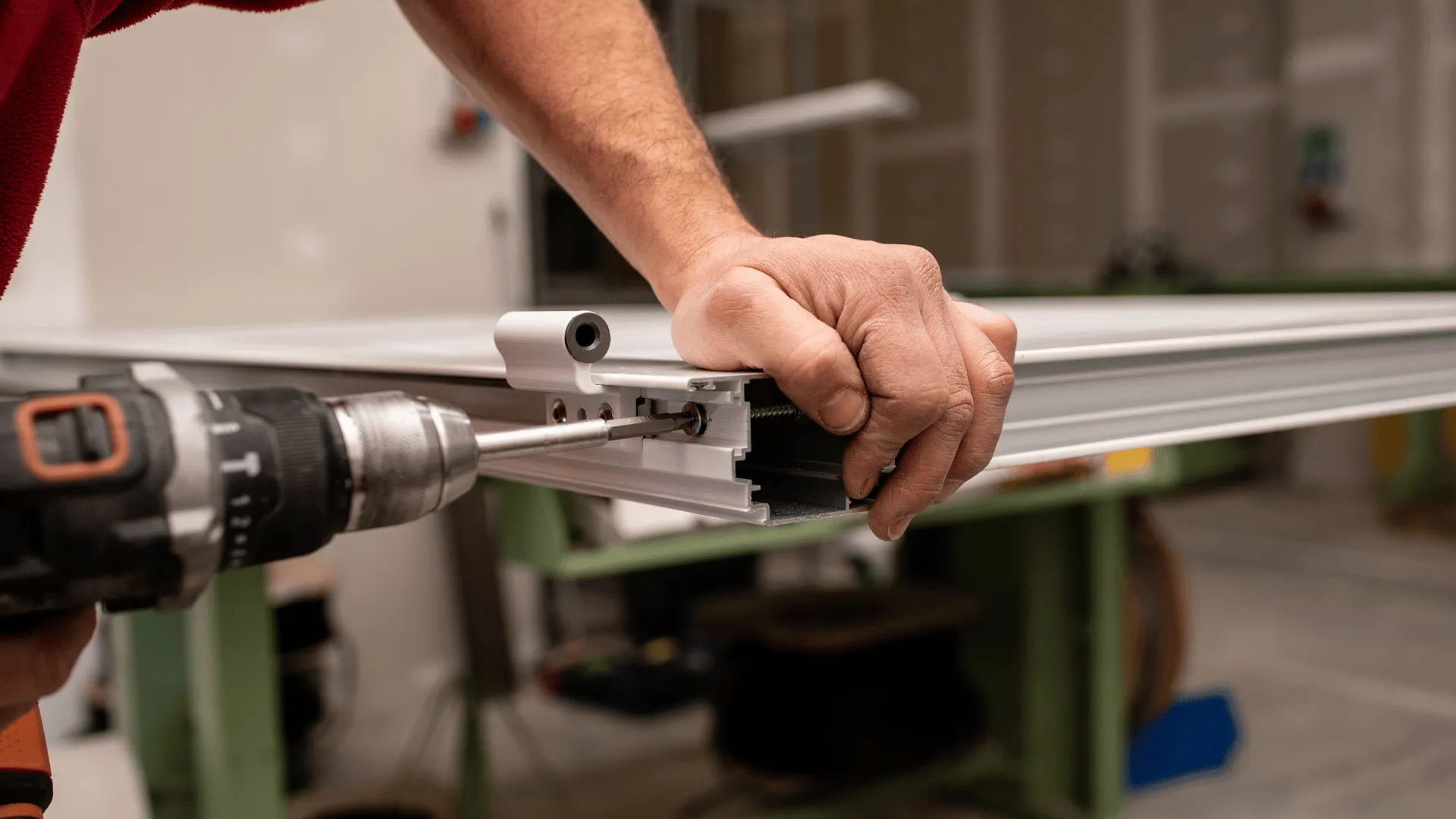
The advantage at Link is that fabrication and finishing happen in the same building.
A custom batten profile drawn on Monday can be tested for coating coverage on Tuesday. A bespoke louvre blade can be checked against the powder system before the first run is committed. That feedback loop is the difference between a custom job that lands cleanly and one that takes three calls to fix.
For Sydney architectural work, this matters more than it might appear. Site logistics are tight. Lead times are real.
A custom element that arrives on schedule and matches what was drawn is worth a lot more than one that arrives late or needs rework on site.
Custom isn’t always the right answer. When a project genuinely needs it, though, the workshop has to be set up to handle design, fabrication, and finishing as a single workflow. Not three separate ones with handover problems between them.
If you have a Sydney project that’s pushing past standard fabrication, our team can walk through what’s possible.